What a Single Video Explains About AI Applied to Small Businesses, and Why It’s Worth 15 Minutes
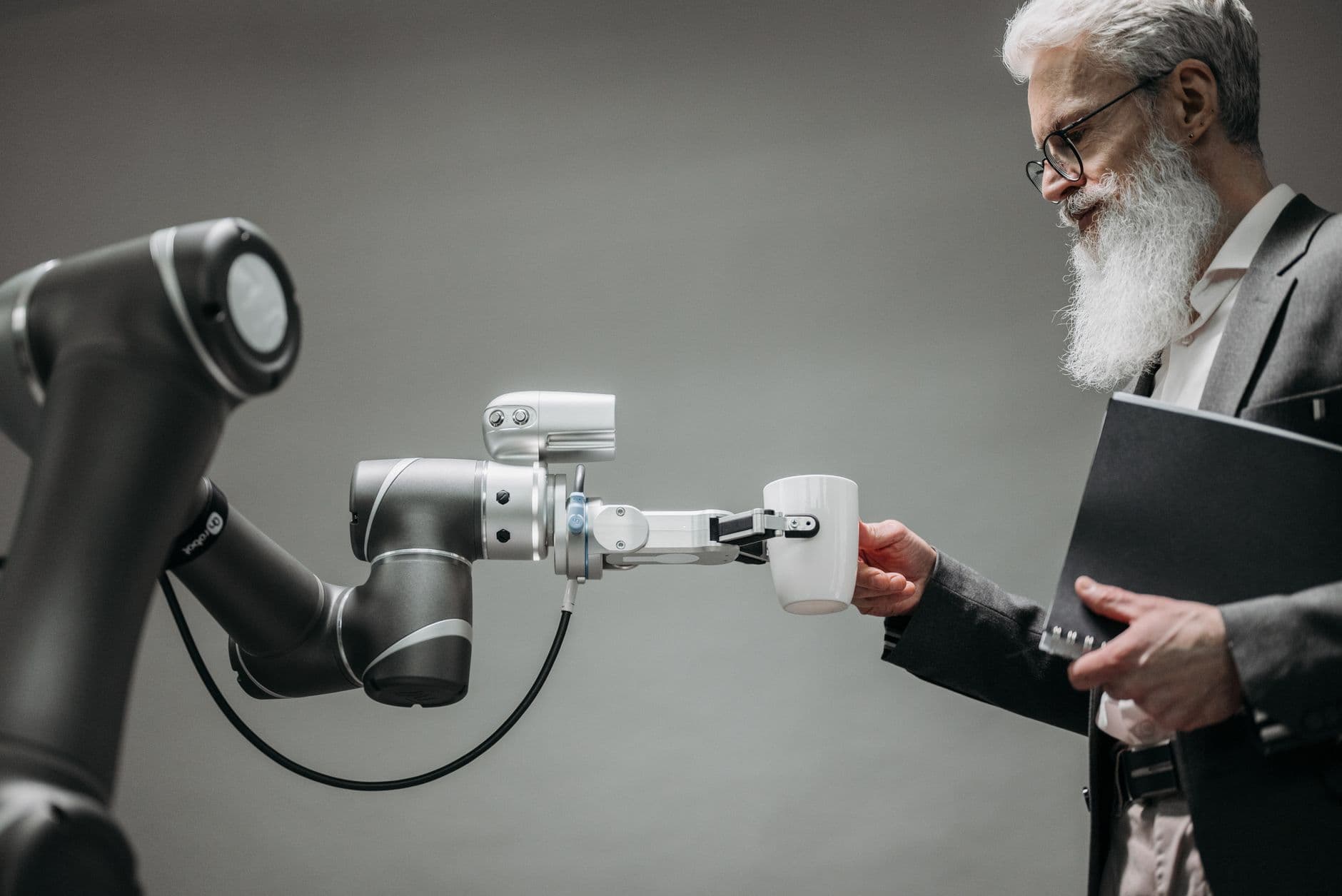
There is a lot of video content about AI that is pure noise: people selling smoke and using the word "revolution" every other sentence. This video is not like that. It is the kind we share internally at Ardeiro.AI because it says, with examples, something we have been defending for years: AI is no longer a luxury reserved for large companies with IT departments. It is a tool that a five-person business can put to work this very week.
What the video is about, in short
The central idea is simple: the combination of generative AI and low-code automation has lowered the barrier to entry so much that the bottleneck is no longer the technology, but the internal organization. In the past, automating a process, such as collecting orders, classifying emails or generating quotes, required a developer, weeks of work and a budget that an ordinary small business simply did not have. Today, the same result can be achieved by connecting tools that already exist, configuring them properly and dedicating a couple of afternoons to the work.
What we like most about the video is that it does not sell AI as a magic box that "does everything by itself". It insists on something we fully agree with: AI does not replace the work of thinking through how your business operates; it accelerates it. If you are not clear about the process you want to automate, no tool will solve that for you. First the process, then the technology.
Another point it touches on, and one that is rarely explained well, is the difference between using generative AI on its own, by writing a prompt in a chat whenever you need something, and building an automation that uses generative AI as one piece within a broader workflow. The first is useful for one-off tasks. The second is what truly changes how a team works, because it does not depend on someone remembering to open a chat: the process happens on its own, in the background, and you only step in when a human decision is needed.

Photo by Ibrahim Boran on Pexels
Why this is not theory, we see it every week
At Ardeiro.AI we work with small local businesses: workshops, clinics, shops, professional offices and agricultural cooperatives. None of them has an IT department. And in all of them we see the same pattern the video describes: manual processes that consume hours from someone who could be doing higher-value work.
A real, simplified example: a small accounting office received invoices by email, WhatsApp and on paper, and someone had to copy the data manually into the accounting software. With a workflow that combines automatic document reading and AI-based expense classification, that work is reduced to reviewing and confirming, not typing. It is not science fiction, nor is it a six-month project. It is exactly the kind of "boring but profitable" automation the video talks about, and the kind that rarely appears in headlines because it does not sound spectacular.
Another similar case involved a small retail business and its after-hours customer service on WhatsApp. The point was not to replace the person who handles customers, but to let a trained assistant, using the business's real information, answer repeated questions about opening hours, stock, prices or returns. Only conversations that require human judgement, such as a complaint, a special order or a negotiation, are passed to a person. This is exactly what the video means by "removing friction from repetitive work so there is room for what really does require a person".
In almost every case we handle, the problem is not a lack of technology. The problem is that nobody has sat down for half an hour to map the process as it actually happens today. Once that map exists, two or three steps that can be automated without taking unnecessary risks almost always appear.
The three points in the video that feel most honest to us
There are three specific claims in the video that we fully support, because they match what we see in day-to-day work:
A language model can write a perfect email, but if the customer history is spread across three different Excel sheets with names written in different ways, any automation that depends on that data will fail. The video makes this clear: organizing the data first is more important than choosing the fashionable AI tool of the moment.
It also insists that these tools cost money and setup time. What has changed is the proportion: what used to cost thousands of euros and months of development can now cost a few hours and a modest monthly subscription. That democratizes access, but it does not make automation free or instant.
If a process is badly designed, automating it only makes the mistake repeat faster and at a larger scale. Before putting AI into something, you have to ask whether that "something" makes sense as it is, or whether it should actually be simplified first.
That last idea is, for us, the most important point in the video, and the one that appears least often in the AI content circulating out there. It is easy to sell automation as a miracle patch. It is less marketable, but much more honest, to say that sometimes the solution is not to automate a step, but to remove it from the process altogether.
What the video does not say, and is worth keeping in mind
We like commenting on content like this, but we also like pointing out its limits, because part of our job is not selling smoke.
First: the video speaks in general terms, and "in general" does not describe any real Galician small business. Every business has its own inherited tools, its own volume of data and its own internal resistance to change. What the video solves in a five-minute example usually involves conversations, testing and some adjustment that does not work on the first try. That means time, and time has a cost.
Second: it barely discusses the people who have to learn to work with these tools. The technical part of setting up an automation is often the fastest part. The slower part is getting the team to change how it works, trust the new workflow and avoid returning, out of habit, to the usual manual method after the first week.
Third: privacy and regulatory compliance are barely mentioned, and in a business that handles customer, health or financial data, this is not a minor detail. Before connecting any AI tool to real data, you need to know where that data is processed and whether that is compatible with the GDPR and with the sector you work in. It is not an insurmountable obstacle, but it is a step that cannot be skipped.
If you connect an AI tool to a process without reviewing what data goes in and out, without defining who reviews exceptions and without a plan for when something fails, the time saved turns into time lost fixing errors. Automation needs as much design as the manual work it replaces, if not more.
How to bring this into a small business, step by step
If, after watching the video and reading this, you want to know where to begin, this is the logic we apply with our clients:
Do not start by asking, "What can I do with AI?" Start by asking, "Which repetitive task costs us the most hours every week?" That is the candidate for automation.
Map the process without idealizing it. Include the shortcuts, exceptions and duplicated emails that exist in reality, not the procedure manual nobody follows.
Almost no process is automated one hundred percent in one go, and trying to do so is usually a bad idea. Identify the repetitive and predictable part, and leave the part that requires human judgement in a person's hands.
Run a one-week test with one customer or one supplier, not a full rollout on day one. Problems appear sooner and cost less.
Measure the before and after: time spent, errors and customer complaints. Without that comparison, it is impossible to know whether the automation is worth the effort of setting it up.
Why it is worth watching
There are dozens of AI videos promising that you will "multiply your productivity" without explaining how. This one is worthwhile because it gets to the point: concrete processes, concrete tools and the honest warning that none of this works if there is no clear process behind it. It is exactly the kind of content we would like any small business owner in Galicia to watch before spending money on the first AI tool offered to them on LinkedIn.
The conclusion we take from it, and the one that matches what we do at Ardeiro.AI every day, is this: AI for small businesses is not about having the most powerful model or the most expensive subscription. It is about looking closely at how your business works today, finding the points where routine causes time to be lost, and using the available technology, which is already far more accessible than it was two years ago, to remove that friction without creating new friction elsewhere. The video explains it well. We would only add that, in practice, the hardest part is not technical: it is sitting down and calmly looking at the process before touching anything.
Not sure where to start? We help you spot it
Most small businesses do not need a complete transformation or a major investment to start taking advantage of artificial intelligence. What they need is to identify which tasks are consuming time unnecessarily and which ones are worth automating.
That is why, at Ardeiro.AI, we offer a free 30-minute diagnostic, with no obligation.
During that session, we will analyze how your business works, review the processes that cost your team the most time and show you which automations could bring a real return. If we see that AI would not add value in your case, we will tell you that too. We prefer an honest recommendation to selling you a solution you do not need.
By the end, you will have a clear list of improvement opportunities, an estimate of the effort needed to implement them and all the information you need to decide whether you want to take the next step.
If you want to book your free diagnostic, just get in touch with us. In half an hour, you can find out whether there are working hours your business could stop losing every week.
Cover image: Pavel Danilyuk on Pexels
Want to discuss this?
No public comments. But my inbox is open. If something resonates or grates, write to me.
Email me directly →