Automating appointment management: a website with a calendar + a WhatsApp agent

A business that runs on appointments — a physiotherapy clinic, a hair salon, a beauty centre, a doctor's practice — has a problem that almost never shows up in the profit and loss account but is there every single day: the time spent managing the diary over the phone, the slots that stay empty because someone didn't bother to cancel, and the calls that go unanswered because there's a customer standing right there.
It's not a minor issue, even if there's little independent data measuring exactly how much revenue this costs a small business in Spain. It's one of the places where money can leak away unnoticed, because it doesn't appear as an expense but as revenue that never materialised.
In this article I explain what a website-based appointment management solution with an integrated calendar plus a WhatsApp-connected agent actually is, how it works in practice, what the best available evidence says about appointment reminders, and how it can change day-to-day life for both the business and the customer booking the appointment — plus how to measure the real impact in your own business rather than assume a generic percentage.
The underlying problem: managing appointments by hand
Before talking about the solution, it's worth describing the problem clearly, because it's the same in almost every appointment-based business.
Missed calls are one part of it: many small businesses report losing calls during working hours simply because the phone is answered by whoever happens to be free, and a customer who can't get through doesn't always call back. There's no solid public data on exactly how many bookings this costs a typical Spanish clinic or salon, but it's a recurring complaint among owners.
No-shows are the second part. Patients and clients forget appointments, and reminders sent through a channel people actually check help reduce that. The most rigorous evidence available on this comes from a 2013 Cochrane systematic review of text-message reminders in healthcare, which found low-to-moderate quality evidence that SMS/MMS reminders increase attendance compared with no reminders (Cochrane, 2013).
It's worth being precise about what that review does and doesn't say: it studied SMS and MMS reminders in healthcare settings up to 2012, not WhatsApp specifically, and it does not measure results for beauty or hair salons. It's a reasonable basis for believing that a well-timed reminder on a channel people check tends to help, but it isn't proof of any specific percentage improvement for a WhatsApp-based system in a Spanish business.
The third factor is admin time: someone has to answer the phone, jot the appointment down in a diary or a spreadsheet, confirm it by phone the day before, reschedule it when something changes, and start all over again. That time doesn't generate direct revenue, but it eats up hours that could be spent serving customers — or, in a small business, hours of the professional who should be treating patients or cutting hair, not managing a calendar.
What this solution actually is: a website with a calendar + a WhatsApp agent
The solution we propose at Ardeiro.AI combines two pieces that work better together than apart.
The first is a website with an integrated appointment calendar. It's a page — usually the business's own website — where the customer sees real-time available slots and books without having to call or wait for someone to answer. The calendar is synced with the business's actual diary, so there's no risk of double bookings, nor of the professional finding out about a new booking only when the customer walks in.
The second piece is an agent connected to the WhatsApp Business Platform, Meta's official name for what used to be called the WhatsApp Business API (WhatsApp Business Messaging Policy). This agent is an automated assistant that responds on the business's WhatsApp: it gives opening hours, suggests available slots, confirms the appointment, changes it if the customer asks, and sends reminders ahead of the date. All without anyone at the business having to keep an eye on their phone.
It's worth being precise here: there's no single, open "WhatsApp SDK" that just anyone can use. Access to these features goes through the WhatsApp Business Platform, usually via an authorised Solution Provider, and messages sent outside an active customer conversation require a pre-approved template and follow WhatsApp's own pricing categories (WhatsApp Business Platform Pricing). On top of that technical foundation sits the agent that manages the conversation with the customer automatically, understanding what they're asking for and replying naturally, rather than through a rigid numbered menu.

Foto de Leeloo The First en Pexels
How it works in practice, step by step
The customer makes first contact
They can do this in two ways: by visiting the business's website and opening the calendar, or by messaging the business's WhatsApp directly, just as they would for any other query.
The system shows real availability
Both the website and the WhatsApp agent check the same calendar, so the slots shown are always real, with no duplicates or phantom bookings.
The appointment is confirmed instantly
The customer picks a time, confirms, and receives an automatic confirmation message. There's no need to wait for someone at the business to manually review and reply.
Automatic reminders are sent
Before the appointment — usually 24 hours ahead and again a few hours before — the agent sends a WhatsApp reminder, with the option to confirm, cancel or reschedule directly from the chat.
The business gets the information without managing it
The professional or the front desk sees the diary updated at all times, without ever having to pick up the phone or write anything down by hand.
What can realistically be expected, and how to measure it
The Cochrane review gives a reasonable, if modest, basis for expecting text reminders to help with attendance. Beyond that, the honest answer is that the size of the improvement in a specific hair salon, clinic or beauty centre will depend on how many no-shows are actually caused by forgetting (rather than, say, price or scheduling conflicts), and that's something each business has to measure for itself.
Hypothetical example (not a real measurement): imagine a clinic with 20 appointments a day, and suppose — purely as an illustration — that a tenth of them are no-shows caused by forgetting. Reducing forgetting-driven no-shows by half through reminders would, in that hypothetical scenario, recover one appointment slot a day. Whether that maps into extra revenue depends on whether that slot can actually be filled by another customer, and what the profit margin on that appointment is, not just the gross fee charged.
The simplest way to know what to expect in a real business is to record, for a month, how many booked appointments are no-shows and why (when known), then compare that figure after introducing automated confirmations and reminders.

Foto de Cedric Fauntleroy en Pexels
How it changes day-to-day life for the business
The most immediate effect is that constant interruptions to manage the diary stop happening. In a hair salon or a physiotherapy clinic, every call that comes in while a customer is being attended to forces an uncomfortable choice: leave the customer waiting, or let the phone ring and risk losing that booking. With a WhatsApp agent handling things on its own, that dilemma disappears. The phone stops ringing for questions the agent already answers, and the calls that do come through are the ones that genuinely need a human conversation.
It also cuts down on scheduling errors. When a booking is written down by hand, in a notebook or even a shared spreadsheet, it's easy for times to overlap, dates to get copied wrong, or for whoever answers the phone not to have the colleague's updated calendar in view. A single calendar, connected to both the website and the WhatsApp agent, removes that margin for error because there's only one source of truth.
And then there's admin time. This will vary a lot depending on appointment volume and business size, but even a modest reduction — say, an hour or two a week — is time a self-employed professional can put towards seeing one more customer, training, or simply resting.
How it changes the customer's experience
On the customer's side, the change is just as significant, even if it's less visible from inside the business.
The first is availability. A customer can book an appointment at eleven at night on a Sunday, without having to wait for the clinic or salon to open the next day. For businesses whose customers work office hours, this removes real friction: many people put off booking simply because they don't have time to call during working hours.
The second is response speed. Asking on WhatsApp whether there's a slot on Thursday and getting an instant reply, instead of having to call and wait for someone to pick up, changes how the business is perceived — customers comparing several nearby businesses will notice which one answers fastest.
The third is reminders. Getting a WhatsApp message the day before the appointment, with the option to confirm or change the time in a single reply, reduces the feeling of managing the appointment alone. It's more convenient than writing it down yourself and hoping you don't forget.
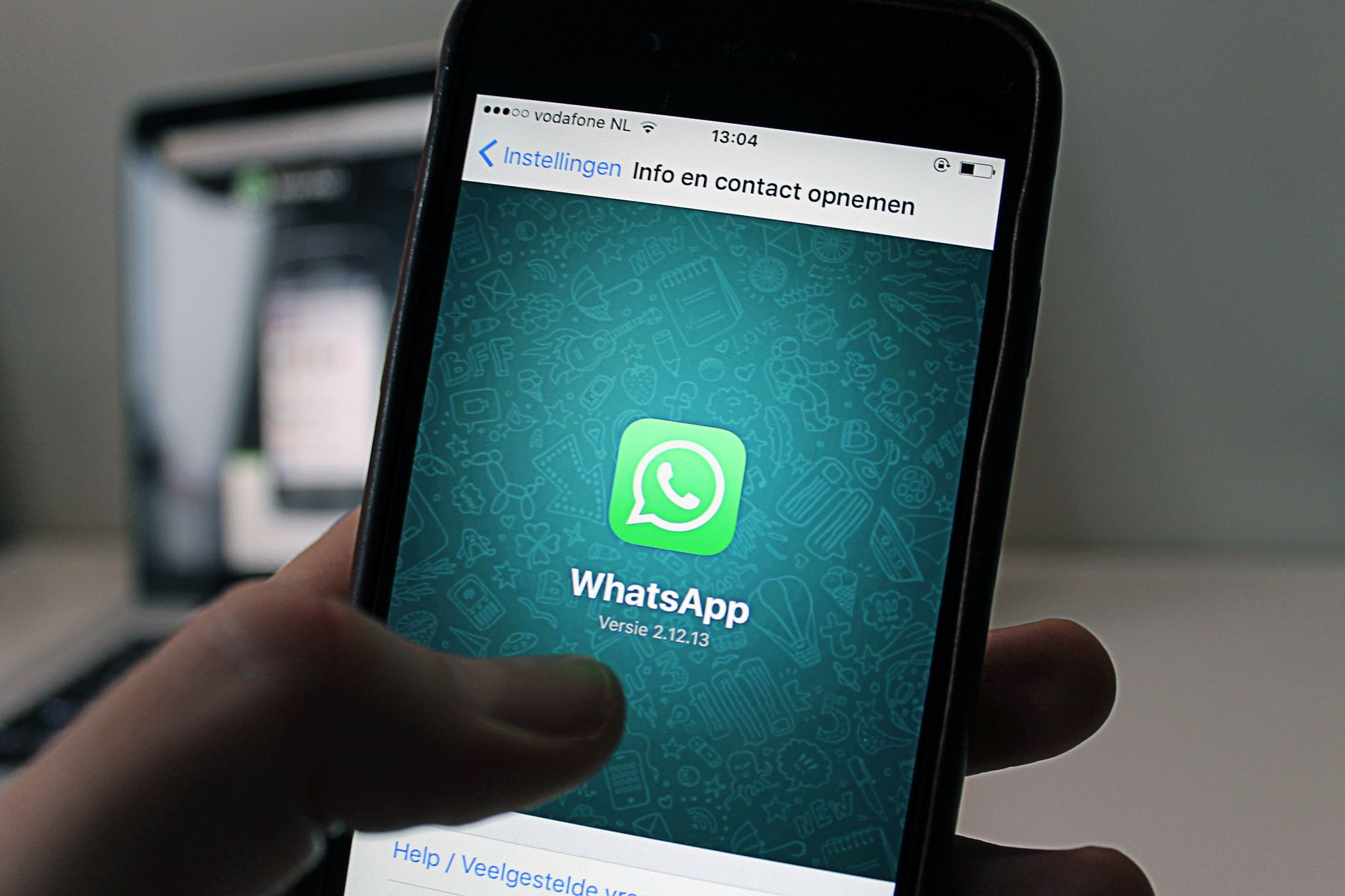
Foto de Anton en Pexels
What kind of businesses this makes most sense for
This combination of a website with a calendar and a WhatsApp agent fits particularly well with businesses that share these traits: a high volume of short, recurring appointments (hair salons, beauty centres, physiotherapy), a real cost attached to a no-show (an idle hour of a physiotherapist's time costs direct money), and a customer base that already uses WhatsApp to communicate with businesses.
It's not a magic fix, nor does it fully replace human interaction. Some customers will always prefer to call, and there are situations — an urgent matter, a complex clinical question — where the agent should hand things over directly to a person instead of trying to solve everything itself. A well-designed automation of this kind accounts for exactly that: automating the repetitive parts and letting people handle what genuinely needs human judgement.
Conclusion
The best available independent evidence — a 2013 Cochrane review of SMS/MMS reminders in healthcare — supports the general idea that reminders through a channel people actually check help reduce missed appointments, though it doesn't measure WhatsApp specifically nor any particular business sector. Beyond that, the real gains for a hair salon, clinic or beauty centre depend on the business's own numbers, which is why measuring your no-show rate and missed calls before and after automating is more useful than any generic percentage. Combining a website with an integrated calendar and an agent connected to WhatsApp Business isn't a tech fad — it's solving a very concrete problem: making booking and remembering an appointment as easy as sending a message.
Sources
- Mobile phone messaging reminders for attendance at healthcare appointments - Cochrane (2013)
- WhatsApp Business Messaging Policy
- WhatsApp Business Platform Pricing
Cover image: JESHOOTS.com on Pexels
Want to discuss this?
No public comments. But my inbox is open. If something resonates or grates, write to me.
Email me directly →